🌏 Blogs / Articles / News / Classifieds / Press Releases / PSA / Podcast / Poetry / Storytelling

 🚀 Expand Your Reach. Amplify Your Impact. Elevate Your Visibility. 📣

Want to get your news, event, business, ministry, nonprofit, or organization in front of more people? 🌎✨ Take advantage of our trusted media partnerships and expand your exposure through a powerful nationwide community news network featuring more than 1,000 hyperlocal websites serving audiences across the United States. 🇺🇸📰

✅ Increase brand awareness
✅ Reach targeted local communities
✅ Improve online visibility and discoverability
✅ Strengthen your digital presence
✅ Generate greater engagement and media exposure
✅ Enhance visibility in search engines and AI-powered platforms 🤖📈

Whether you're promoting a press release, event, product launch, ministry initiative, community program, or business announcement, our strategic distribution services can help your message reach the right audience at the right time. 🎯📢

📞 For professional press release distribution, advertising opportunities, media outreach, and promotional services, visit https://heypapipromotions.com/advertise today and discover how we can help maximize your reach and impact! 🚀🌟📰 

📣 Top 10 Christian Press Release Distribution Service in 2025 – Boost Your Faith-Based Message with Hey Papi Promotions

office chair parts (2)

Green Chair Parts and Eco Manufacturing

For office furniture manufacturers, understanding chair components from a system perspective is increasingly important. A chair's durability, ergonomics, repairability, and environmental footprint are influenced by the interaction between its seat, backrest, mechanism, gas lift, base, casters, and other components.
 
At the same time, sustainability is becoming more practical rather than purely marketing-driven. Buyers are increasingly asking whether green furniture parts, low carbon chair parts, and eco manufacturing chair strategies can reduce material consumption, production waste, transportation impact, and end-of-life problems without compromising performance.
 

1. What Are the Main Chair Parts and What Does Each Component Actually Do?


What are the essential parts of an office chair?

 
A typical office chair contains several functional systems rather than a single structure.
The seat shell provides the structural foundation for the seat. Above it, cushioning and upholstery determine the immediate contact characteristics. The backrest supports the user's torso, while the headrest can provide additional support during reclined positions.
Below the seat, the mechanism plate controls functions such as height-related movement, tilt, recline, and locking. The gas lift cylinder provides vertical adjustment and connects the upper chair assembly with the base.
The chair base distributes the load across multiple support points, while casters provide mobility and transfer dynamic loads to the floor. Armrests support the forearms and can influence shoulder and working posture.
This explains why replacing one chair part is not always as simple as finding a component with the same appearance. Dimensions, mounting interfaces, load paths, and movement characteristics must match.
 

Why does compatibility matter when sourcing replacement chair parts?

 
A component can look correct but still be mechanically incompatible.
For example, a gas lift must match both the mechanism and base interfaces. A caster needs the correct stem connection and must be appropriate for the intended flooring and load. An armrest requires compatible mounting points and sufficient structural support.
 
For B2B buyers, a proper chair-parts specification should therefore consider:
dimensions and tolerances;
mounting interfaces;
material;
load requirements;
movement range;
environmental conditions;
assembly method;
expected service life.
The goal is not simply to make the component fit. It needs to function correctly within the complete chair assembly.
 
green furniture parts for office
 

2. How Can Green Furniture Parts Reduce the Environmental Impact of Chair Manufacturing?


What makes a chair part environmentally preferable?

 
A green furniture part should not be defined simply by whether it contains recycled material.
Environmental performance can come from several stages of the product lifecycle: material selection, manufacturing efficiency, transportation, service life, repairability, and end-of-life treatment.
For example, a lightweight component may reduce transportation-related emissions, while a durable component may extend the service life of the entire chair. A replaceable caster or armrest can potentially prevent a chair from being discarded because of one failed component.
This creates an important distinction between material sustainability and system sustainability.
A component made from recycled material is not automatically a sustainable solution if it has poor durability and causes premature replacement. Conversely, a durable component may provide environmental benefits by extending product life even if its material is not marketed as "green."
 

Are low carbon chair parts always made from recycled materials?

 
No.
Low carbon chair parts can be achieved through multiple approaches.
Manufacturers can consider lower-impact materials where performance allows, reduce unnecessary material thickness, optimize component geometry, improve production yield, minimize scrap, and reduce transportation weight.
Manufacturing efficiency is particularly important for injection-molded components. Optimizing mold design, cycle efficiency, material utilization, and production consistency can reduce waste without changing the functional design of the part.
 
The most effective strategy is therefore to evaluate carbon impact across the component's lifecycle rather than focusing on one material characteristic.
 

Why is durability an important part of sustainable chair design?

 
A chair that needs frequent replacement can create a larger environmental burden than a durable chair that remains in service for years.
This is why sustainability and engineering quality should not be treated as opposing objectives.
For example, a well-designed chair base should maintain structural integrity under repeated loading. A mechanism should withstand repeated tilting cycles. Casters should remain functional under continuous movement. If these components fail prematurely, the environmental and financial costs extend beyond the individual replacement part.
For manufacturers, green furniture parts should therefore be evaluated through both environmental impact and expected functional life.
 

3. What Does Eco Manufacturing Mean for Office Chair Parts?


How can eco manufacturing chair strategies reduce production waste?

 
An eco manufacturing chair approach starts before the finished chair reaches the assembly line.
Component manufacturers can reduce environmental impact through:
optimized material usage;
improved production yield;
reduced defective output;
efficient mold and tooling design;
rationalized component structures;
reduced packaging materials;
better production planning;
longer component service life.
The objective is not to add an "eco" label to an existing manufacturing process. It is to identify where material, energy, time, and transportation are unnecessarily consumed.
 

Can modular chair parts support more sustainable furniture?

 
Yes, when modularity is deliberately designed into the product.
If casters, armrests, mechanisms, gas lifts, or other components can be replaced independently, a chair may remain operational even when one part reaches the end of its useful life.
This can support a repair-oriented furniture model instead of a replacement-oriented model.
However, modularity has a trade-off. Additional interfaces can increase component count, assembly requirements, and material usage. The objective should therefore be functional modularity, not simply adding more detachable parts.
 
FSGROWING's manufacturing structure illustrates the importance of component specialization. Its specialized workshops work together to produce different office chair components, including casters, chair bases, gas lift cylinders, mechanism plates, seat shells, backrests, headrests, armrests, and more. This type of component-focused production can support manufacturers that need to evaluate chair construction at the individual-part level.
 

Why should B2B buyers ask about manufacturing consistency?

 
Sustainability is closely connected with production efficiency.
High defect rates mean wasted raw materials, energy, labor, packaging, and transportation. Inconsistent components can also create assembly problems and increase rejection rates further down the supply chain.
For OEM buyers, supplier evaluation should therefore include quality-control processes, dimensional consistency, material control, production capacity, and batch stability—not just the nominal material or unit price.
 

4. Chair Parts What Are the Biggest Problems for Manufacturers and Buyers?

 
Which chair parts usually require the most attention during product development?
Structural and movement-related components deserve particular attention, including seat shells, mechanisms, gas lifts, bases, and backrest structures.
These parts influence load transfer and user movement and therefore need to be considered together.
 
Are low carbon chair parts more expensive?
Not necessarily.
Material optimization, lightweight design, improved production yield, and reduced waste can sometimes lower costs while reducing environmental impact.
However, recycled or specialized materials may increase material costs in some applications. The correct evaluation should consider total lifecycle cost rather than material price alone.
 
Is recycled plastic automatically a better chair material?
No.
The material must still provide adequate strength, stiffness, dimensional stability, fatigue resistance, and environmental performance for its application.
Using a lower-impact material that significantly reduces service life may not deliver the expected sustainability benefit.
 
How can manufacturers make office chair parts easier to recycle?
Material simplification can help. Where practical, reducing unnecessary material combinations and designing components for easier separation can improve end-of-life processing.
Clear material identification and modular construction can also support sorting and replacement.
 
Can replacing one chair part really be considered sustainable?
Potentially, yes.
If replacing a caster, armrest, mechanism, or other component allows the rest of a functional chair to remain in service, it can avoid premature disposal of the complete product.
This is one of the strongest arguments for designing chairs around maintainable components.
 
What should buyers look for when sourcing green furniture parts?
Look beyond environmental claims. Ask about material composition, durability, production waste, quality consistency, packaging, expected service life, and whether the component can be repaired or replaced.
 
A credible sustainability strategy should be supported by measurable manufacturing and product information rather than vague "eco-friendly" terminology.
 
If you are reviewing office chair components for a new product, replacement program, or OEM project, explore the different chair-part categories available from FSGROWING and assess each component according to your chair's structural, functional, and sustainability requirements.
Read more…
The global furniture supply chain has become far more demanding than it was a decade ago. Buyers are no longer focused only on manufacturing quality. They now pay close attention to export packaging standards, container optimization, moisture protection, and international compliance requirements.
For office chair component supplier, export packaging is no longer a secondary operational issue. It directly affects:
Freight efficiency
Customs clearance
Damage rates
Warranty claims
Warehouse handling
Distributor profitability
Modern global buyers increasingly expect suppliers to understand not only manufacturing, but also advanced export packaging furniture parts engineering.
 

Why Are Export Packaging Standards Becoming So Important in Furniture Parts Shipping?


Why International Shipping Creates Higher Packaging Risks for Chair Components

 
Export transportation is fundamentally different from domestic shipping.
International cargo may experience:
Long ocean transit times
High humidity exposure
Container vibration
Repeated loading and unloading
Compression stacking
Customs inspections
Temperature fluctuations
 
Office chair parts are especially vulnerable because many components combine:
Metal structures
Plastic surfaces
Painted finishes
Precision dimensions
 
Even small packaging failures can lead to:
Surface scratches
Cracked armrests
Bent mechanism plates
Corrosion
Deformation
Missing accessories
 
This is why buyers increasingly search for suppliers with professional export packaging systems rather than simple carton packing capability.
 

Why ISPM 15 Compliance Became a Global Requirement

 
One of the biggest concerns in export packaging furniture parts is ISPM 15 compliance.
ISPM 15 regulates wood packaging materials used in international shipping and was developed to prevent the global spread of wood-borne pests. Countries worldwide increasingly enforce these regulations on pallets, crates, and wooden dunnage.
Under ISPM 15 requirements:
Wood packaging must be heat-treated or fumigated
Packaging must carry approved IPPC markings
Non-compliant pallets may be rejected or destroyed at customs
 
For furniture exporters, this creates serious operational risks because many office chair components are shipped on wooden pallets.
Customs delays caused by non-compliant pallets can lead to:
Port storage fees
Shipment rejection
Delivery delays
Customer disputes
Industry discussions show that missing or improperly visible ISPM markings remain one of the most common export packaging mistakes.
 

Why Buyers Now Evaluate Packaging Before Choosing Suppliers

 
Global importers increasingly understand that shipping damage is often caused by poor packaging design rather than poor product quality.
This is especially true for:
Nylon chair bases
PU armrests
Aluminum components
Painted mechanism systems
Mesh backrest frames
 
As a result, professional buyers increasingly ask:
Are pallets ISPM 15 certified?
Is moisture protection included?
Are cartons double-wall or triple-wall?
Are edge protectors used?
Is pallet stability tested?
Export packaging has become part of supplier evaluation itself.
 
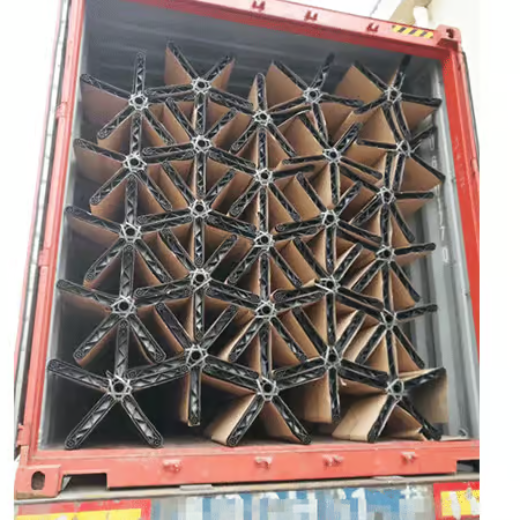
shipping chair parts
 

What Are the Biggest Packaging Challenges When Shipping Chair Parts?


Why Moisture Is the Biggest Enemy During Ocean Freight?

 
One of the most underestimated risks in shipping chair parts is container moisture.
Ocean containers experience major humidity fluctuations during long transit cycles. Condensation can form inside containers and drip directly onto cartons and products.
This creates severe risks for:
Steel mechanism plates
Gas lift cylinders
Fasteners
Painted metal structures
 
Common moisture related problems include:
Rust formation
Carton collapse
Mold growth
Surface oxidation
Label damage
 
Professional exporters increasingly use:
Moisture barrier bags
Stretch wrapping
Desiccants
Anti rust protection
Vapor barrier packaging
These solutions are especially important for bulk shipments traveling across humid maritime routes.
 

Why Pallet Stability Determines Export Safety?

 
Many export losses occur because pallet loads shift during transportation.
Improper pallet packaging chair parts can create:
Leaning cargo
Collapsed cartons
Broken components
Forklift damage
Modern export packaging increasingly focuses on unit-load engineering rather than only carton strength.
 
Professional packaging systems often include:
Stretch film stabilization
Edge protectors
Strapping systems
Tier sheets
Anti-slip layers
 
These techniques help maintain pallet integrity during:
Ocean vibration
Warehouse stacking
Container unloading
For chair parts distributors, stable palletization reduces both damage claims and warehouse handling problems.
 

Why Packaging Optimization Affects Freight Costs?

 
Freight cost optimization has become a major concern in the office furniture industry.
Office chair parts create difficult logistics conditions because products vary significantly in shape and density:
Chair bases consume large volume
Mechanism plates add heavy weight
Armrests require scratch protection
Casters create concentrated pressure points
Poor packaging design often wastes container space and increases freight cost per unit.
 
This is why experienced exporters increasingly develop:
Nested packaging systems
Semi-knockdown packaging
Modular carton sizing
Container optimization layouts
Efficient packaging engineering now directly affects distributor profitability.
 

How Are Professional Furniture Parts Manufacturers Improving Export Packaging Standards?


Why Integrated Manufacturing Helps Improve Packaging Coordination?

 
Export packaging quality is often connected to manufacturing coordination itself.
When suppliers outsource multiple components across unrelated factories, packaging inconsistency becomes common.
 
Integrated production systems allow manufacturers to standardize:
Carton dimensions
Packaging materials
Protection methods
Loading procedures
Labeling systems
 
For example, FSGROWING operates specialized workshops that work together to produce different office chair components, including casters, chair bases, gas lift cylinders, mechanism plates, seat shells, backrests, headrests, armrests, and more. This type of coordinated production structure can help improve packaging consistency across different component categories while simplifying export logistics management.
Global buyers increasingly prefer suppliers capable of coordinating both production and export packaging systems.
 

Why Protective Packaging Is Becoming More Technical?

 
Modern office chair components often include:
High-gloss surfaces
Precision plastic molding
Electroplated finishes
Aluminum polishing
Scratch-sensitive coatings
Basic carton packaging is no longer sufficient for many export shipments.
 
Professional suppliers increasingly use:
Foam separators
Individual protective sleeves
Molded inserts
Reinforced corners
Layered protection systems
This is especially important for high-end ergonomic chair components where cosmetic damage directly affects resale value.
 

Why Documentation Is Part of Export Packaging Standards?

 
Many buyers focus only on physical packaging while overlooking documentation compliance.
Professional export packaging systems increasingly include:
Pallet labels
Barcode systems
Packing lists
Country-of-origin marking
ISPM 15 documentation
Carton identification systems
 
Incorrect packaging documentation can create:
Customs delays
Warehouse confusion
Inventory errors
Shipment disputes
Export packaging is now deeply connected to supply chain traceability.
 

What Will the Future of Export Packaging Furniture Parts Look Like?


Why Sustainability Is Reshaping Packaging Design?

 
Environmental pressure is changing global packaging standards.
Buyers increasingly prefer:
Recyclable packaging
Reduced plastic usage
Lightweight pallet systems
Reusable packaging materials
Lower carbon logistics
 
This creates new challenges for furniture parts exporters because packaging must balance:
Sustainability
Protection strength
Freight efficiency
Cost control
The future packaging market will increasingly reward suppliers that can optimize all four simultaneously.
 

Why Smart Packaging and Warehouse Integration Are Growing?

 
Large distributors increasingly integrate packaging with warehouse automation systems.
Modern packaging strategies now consider:
Barcode scanning
Warehouse stacking efficiency
Automated unloading
Inventory tracking
Distribution center compatibility
Packaging is no longer only about protection. It is becoming part of logistics intelligence itself.
 

Why Export Packaging Expertise Is Becoming a Competitive Advantage?

 
The office furniture industry is becoming more global and more technical.
Buyers increasingly choose suppliers that understand:
International packaging regulations
Freight optimization
Customs compliance
Moisture prevention
Long distance transportation risks
Export packaging expertise is now viewed as part of overall supply chain capability rather than a simple warehouse task.
 
Suppliers that fail to improve packaging systems will likely face:
Higher damage rates
Rising logistics costs
Customer complaints
Reduced distributor trust
 

FAQ: Deep Industry Questions About Export Packaging Furniture Parts

 
What is the biggest mistake in shipping chair parts internationally?
The most common mistake is underestimating moisture and vibration damage during ocean freight. Many suppliers focus only on cartons while ignoring pallet stability and humidity protection.
 
Why is ISPM 15 compliance critical for pallet packaging chair parts?
Many countries reject or quarantine shipments using non-compliant wood packaging materials. Missing ISPM markings can cause serious customs delays and additional costs.
 
Why do chair parts often arrive damaged even when cartons look intact?
Internal movement during shipping can damage products without visibly damaging the outer carton. Poor internal protection is a major industry issue.
 
How can exporters reduce shipping costs for bulk chair parts?
Common methods include:
Nested packaging
Optimized pallet layouts
Semi knockdown packaging
Lightweight protective materials
Better container space utilization
 
Why are integrated suppliers better for export packaging furniture parts?
Integrated suppliers can standardize packaging systems across multiple component categories, improving consistency, compatibility, and logistics coordination.
 
What trends will shape the future of shipping chair parts?
Export packaging is no longer just about protecting products. It has become a critical part of international supply chain strategy for the global office furniture industry.
Read more…

✝️🎸 Christian Music News

♫ CHRISTIAN MUSIC

Daily Christian Music News

New releases, artists, tours, worship music & Christian entertainment news.

LIVE NEWS FEED • Powered by NewReleaseToday
 
Loading the latest Christian music news...