Press-locked steel grating, also known as pressure-locked grating, is a type of load-bearing steel grid structure made by interlocking flat steel bars under high pressure. Unlike welded steel grating, where cross bars are fused to bearing bars through electric resistance welding, press-locked steel grating forms a mechanical connection by pressing the cross bars into pre-notched bearing bars. This creates a strong, uniform grid with excellent rigidity and precise spacing.
The product is widely used in both industrial and architectural fields. It provides excellent strength-to-weight ratio, anti-slip performance, and modern aesthetics.
Huijin Metal Mesh, for instance, manufactures high-quality press-locked steel gratings with precise locking structures suitable for heavy-duty industrial applications and decorative architectural designs.
How Is Press-Locked Steel Grating Manufactured?
The production of press-locked steel grating involves several key steps:
Material Selection:
The process starts with choosing flat steel bars—usually made of mild steel, stainless steel, or galvanized steel. The bearing bars and cross bars must have consistent dimensions for accurate locking.
Slotting or Notching:
Press-Locking Process:
Cross bars, which are also flat bars, are inserted perpendicular to the bearing bars. Through hydraulic pressure or mechanical pressing, the two bars interlock tightly at each intersection, forming a stable and uniform grid.
Finishing:
The grating panels are cut, trimmed, and treated with surface finishes such as hot-dip galvanization, powder coating, or painting to prevent corrosion.
This manufacturing method ensures clean lines, accurate spacing, and high dimensional stability, making press-locked gratings a preferred choice for precision-demanding applications.
What Are the Main Types of Press-Locked Steel Grating?
Press-locked steel gratings are categorized by material, bar thickness, and spacing. The most common types include:
Carbon Steel Press-Locked Grating:
Stainless Steel Press-Locked Grating:
Ideal for corrosive environments, such as chemical plants, marine platforms, and food processing areas.
Galvanized Press-Locked Grating:
Aluminum Press-Locked Grating:
Lightweight and resistant to oxidation, often used in architectural designs for facades and ceilings.
The spacing and dimensions can also vary—commonly 30×100 mm or 40×100 mm—depending on load requirements and design standards.
Why Choose Press-Locked Steel Grating Over Welded Grating?
While both welded and press-locked steel gratings serve similar purposes, they differ in structural design and production method. The advantages of press-locked steel grating include:
Aesthetic Appearance:
Dimensional Accuracy:
Customization:
The process allows variable spacing, material thickness, and bar orientation, making it versatile for customized designs.
Low Maintenance:
Where Is Press-Locked Steel Grating Commonly Used?
Press-locked steel gratings have a broad range of applications, covering both industrial and architectural sectors:
Industrial Applications:
Factory floors and production platforms
Machine enclosures and filters
Construction site walkways and scaffolding
Storage shelves and access ramps
Power plants, oil platforms, and refineries
Architectural Applications:
Building facades and curtain walls
Ceiling systems and ventilation covers
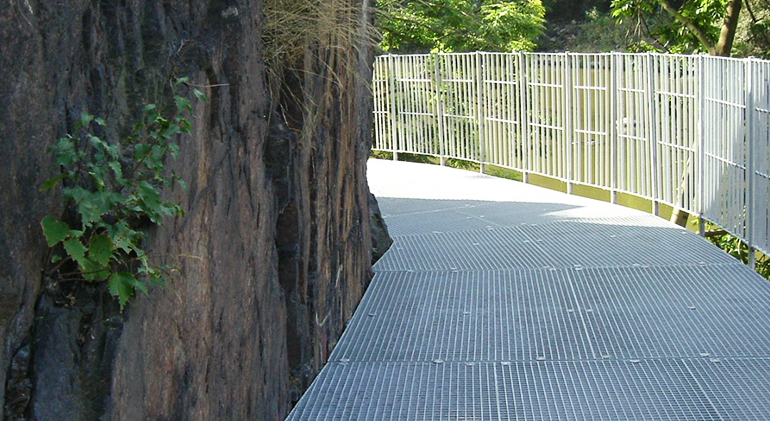
Balconies, fences, and stair treads
Decorative partitions and sunshade panels
Its combination of strength, safety, and visual appeal makes press-locked steel grating a preferred material in modern construction and industrial engineering.
What Are the Advantages of Using Press-Locked Steel Grating?
The popularity of press-locked steel grating stems from its outstanding performance and practical advantages:
High Load Capacity:
Slip Resistance:
Easy Installation:
Corrosion Protection:
Environmental Sustainability:
Aesthetic Flexibility:
How to Maintain and Extend the Life of Press-Locked Steel Grating?
To ensure long-term performance, maintenance should include:
Regular Cleaning:
Corrosion Inspection:
Load Monitoring:
Replacement of Damaged Panels:
If deformation or cracks appear, replace panels promptly to maintain safety.
Proper maintenance extends the lifespan of press-locked steel grating and ensures reliable performance in demanding environments.
What Does the Future Hold for Press-Locked Steel Grating?
With increasing demand for sustainable, durable, and visually appealing materials, press-locked steel grating is expected to grow in popularity. Innovations such as advanced surface treatments, automated manufacturing, and modular assembly will further improve product performance.
As industries and architects seek materials that balance functionality and design, press-locked steel grating continues to prove indispensable—offering safety, efficiency, and style in one unified solution.

Comments