Soldering mistakes are a primary cause of electrical failures, rework, and reduced product lifespan. Even with automated equipment, improper process setup, material mismatch, or insufficient control can result in defects. For manufacturers relying on a select solder machine, avoiding these mistakes is critical to achieving consistent solder quality and stable production outcomes.
Why Does Poor Temperature Control Cause Failures in Select Solder Machine Processes?
Temperature control directly affects solder wetting, joint strength, and component safety. Excessive heat can damage sensitive components and degrade flux performance, while insufficient heat leads to cold solder joints and incomplete wetting.
In select solder machine operations, unstable or poorly defined thermal profiles often cause inconsistent solder flow and uneven joint formation. Precise temperature control ensures that solder melts and solidifies uniformly, reducing variability across assemblies.
How Does Incorrect Solder Volume Affect Select Solder Machine Results?
Applying too much solder increases the likelihood of solder bridging and short circuits, especially in high-density layouts. Too little solder weakens mechanical strength and compromises electrical continuity.
A select solder machine must precisely control solder volume and deposition timing. Consistent solder delivery helps maintain uniform joints and minimizes defects caused by overflow or insufficient coverage.
Why Is Flux Selection and Application Critical in Automated Soldering?
Flux removes oxides and promotes proper solder wetting, but incorrect flux selection or uneven application can create serious issues. Excessive flux may leave residues that affect insulation resistance, while insufficient flux reduces wetting efficiency.
In select solder machine processes, flux behavior must be compatible with temperature profiles and environmental conditions. Proper flux control improves joint appearance, electrical performance, and long-term reliability.
How Do Cold Solder Joints Form and Why Should They Be Avoided?
Cold solder joints occur when solder fails to properly bond with pads or component leads. These joints often appear dull or grainy and may pass initial inspection while failing under mechanical stress or thermal cycling.
Inadequate heating, contaminated surfaces, or incorrect process parameters in a select solder machine are common causes. Preventing cold joints requires stable temperature control and clean soldering surfaces.
Why Does Surface Preparation Strongly Influence Solder Quality?
Contaminants such as oxidation, oil, or moisture significantly reduce solderability. Even advanced soldering equipment cannot compensate for poorly prepared surfaces.
Effective cleaning and proper storage of PCBs and components are essential. In select solder machine workflows, consistent surface preparation helps ensure predictable solder wetting and repeatable joint quality.
How Does Solder Bridging Occur and How Can It Be Reduced?
Solder bridging happens when molten solder unintentionally connects adjacent pads or leads, causing electrical short circuits. This defect is common in fine-pitch assemblies or when solder flow is poorly controlled.
Optimizing nozzle positioning, solder wave stability, and process timing in a select solder machine significantly reduces bridging risks. Advanced process control further improves consistency in complex assemblies.
Why Are Voids in Solder Joints a Serious Reliability Concern?
Voids are trapped gas pockets within solder joints that reduce thermal conductivity and mechanical strength. In power electronics and semiconductor devices, voids can lead to localized overheating and premature failure.
Vacuum-assisted solutions such as the Vacuum Reflow Soldering Oven are commonly used to remove entrapped gases during soldering. These systems help achieve lower void rates and more uniform joint structures.
How Can Equipment Selection Improve Soldering Consistency and Reliability?
The capabilities of soldering equipment directly influence defect rates and process stability. Limited control over temperature, solder delivery, or atmosphere often leads to inconsistent results.
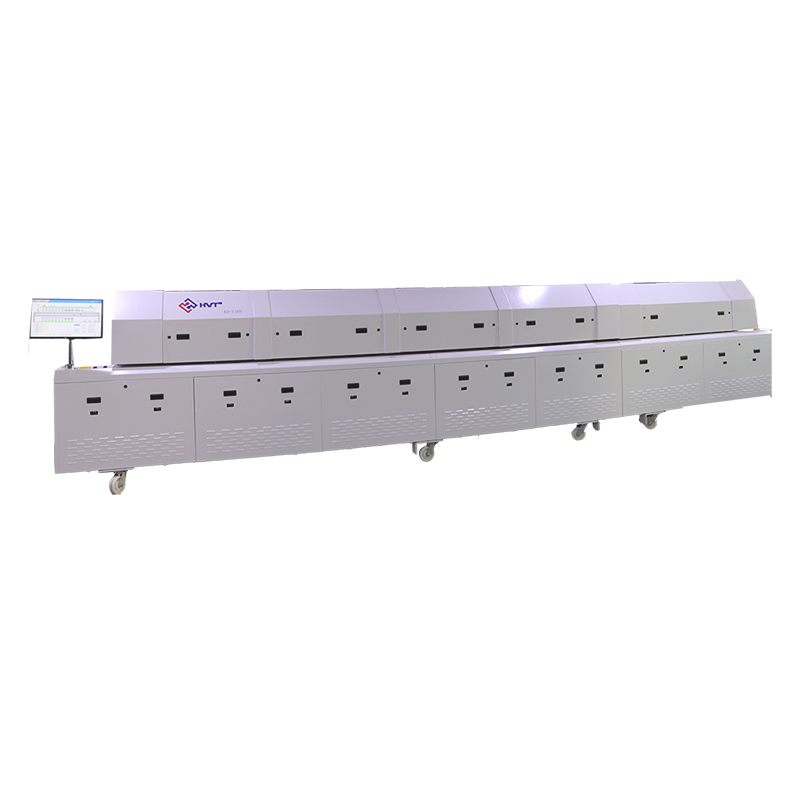
A well-designed select solder machine offers precise motion control, programmable profiles, and repeatable soldering conditions. For higher-reliability applications, systems like the
Inline Nitrogen Vacuum Soldering Oven further reduce oxidation and enhance solder joint quality.
Why Is Process Monitoring Essential in Modern Soldering Operations?
Without real-time monitoring, process deviations may go unnoticed until large numbers of products are affected. Parameters such as temperature stability, solder height, and flux distribution require continuous supervision.
Integrating monitoring systems into select solder machine operations enables early detection of anomalies and helps maintain consistent quality throughout production.
How Do PCB Design Choices Contribute to Soldering Defects?
Design issues such as insufficient pad spacing, inconsistent pad sizes, or poor thermal balance increase the likelihood of soldering problems. These issues can amplify defects even when the soldering process itself is stable.
Applying design-for-manufacturability principles ensures compatibility with select solder machine capabilities and reduces defect risks during assembly.
Why Does Operator Training Still Matter in Automated Soldering?
Automation does not eliminate the need for skilled operators. Incorrect setup, improper maintenance, or misunderstanding process behavior can still cause defects.
Well-trained personnel who understand select solder machine behavior can optimize parameters, respond quickly to issues, and maintain stable production quality.
How Does Vacuum Soldering Improve Long-Term Reliability?
Vacuum soldering reduces oxidation, improves solder flow, and minimizes void formation. These benefits are especially important for high-reliability electronic and semiconductor applications.
Chengliankaida Technology.co.,LTD has participated in industry research focused on vacuum soldering technologies, contributing to broader understanding of void reduction and hermetic packaging reliability.
Why Is Continuous Process Optimization Necessary in Soldering?
As electronic products evolve toward higher power density and tighter tolerances, soldering processes must continuously adapt. Parameters that once produced acceptable results may no longer meet reliability requirements.
Regular evaluation and optimization of select solder machine settings help manufacturers stay aligned with changing technical demands.
What Are the Key Lessons for Avoiding Common Soldering Mistakes?
Avoiding soldering defects requires attention to temperature control, material selection, surface preparation, and equipment capability. A systematic approach to process management reduces rework and improves consistency.
By understanding common soldering mistakes and applying proven solutions, manufacturers can achieve stable, reliable results across select solder machine and vacuum soldering applications, supported by shared industry knowledge from organizations such as Chengliankaida Technology.co.,LTD.

Comments