The rapid evolution of power semiconductor devices, such as Insulated Gate Bipolar Transistors (IGBTs) and Silicon Carbide (SiC) MOSFETs, demands packaging solutions that can withstand extreme thermal and power cycling stress. The primary failure mechanism in these high-power modules often originates at the die attach interface, particularly due to poor thermal management caused by voids (gas pockets) in the bonding layer.
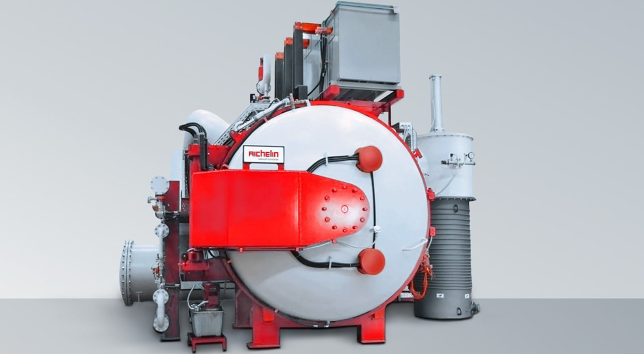
In the pursuit of zero-void interfaces and maximum package reliability, two leading advanced bonding technologies have emerged: high temperature sintering furnace processes and advanced vacuum soldering/welding techniques. While both aim to create robust metallurgical connections, their underlying principles and efficacy in eliminating voids and achieving true hermeticity differ significantly. Understanding these differences is crucial for selecting the optimal manufacturing process for high-reliability components.
How Does the High Temperature Sintering Furnace Achieve Density and Reduce Voids?
Sintering is a solid-state bonding technology where material particles (typically silver or copper nanopaste) are subjected to high temperature sintering furnace conditions and often high pressure. The particles bond together, forming a dense, homogeneous layer without melting the primary material.
The Principle of Sintering
In a high temperature sintering furnace, the process relies on diffusion and particle rearrangement:
Heat Application: The furnace elevates the material temperature, typically to $200^\circ\text{C}$ to $350^\circ\text{C}$ (though high-temperature ceramic sintering can exceed $1000^\circ\text{C}$). This high temperature activates the bonding mechanism.
Pressure Application: In pressure-assisted sintering, external force is applied. This pressure physically forces the nanoparticles closer together, squeezing out entrapped air or solvent and accelerating the diffusion process that leads to high density.
Void Reduction Mechanism: Voids in a sintered joint are primarily caused by residual solvents, incomplete particle packing, or entrapped air. The pressure and high temperature in the high temperature sintering furnace help collapse these small voids, leading to a much lower void rate (often $<5\%$) than traditional lead-based solders.
Advantages of Sintering
The major benefit derived from the high temperature sintering furnace is the creation of a bonding layer with a significantly higher melting point than the processing temperature. This results in superior thermal conductivity and exceptional resistance to thermal cycling fatigue, making it highly desirable for automotive and aerospace power modules.
What Are the Limitations of the High Temperature Sintering Furnace in Eliminating Entrapped Gas?
Despite the high density achieved, the high temperature sintering furnace process still has inherent limitations when aiming for absolute void-free bonds and perfect seals.
Atmospheric Constraint: Most sintering takes place in air or an inert gas (like nitrogen). While the pressure helps expel some gas, it does not guarantee the complete removal of all tiny air pockets trapped within the paste or between the bonding surfaces.
Solvent Removal: Sintering pastes contain organic solvents. While the high temperature sintering furnace is designed to burn off or evaporate these solvents, residual vapor can still get trapped under the die during the high-pressure phase, forming micro-voids.
Hermeticity: Sintering is primarily a bonding technique used for die-attach. It does not typically address the final package seal (lid attach or package enclosure), which is the primary factor determining the package’s hermeticity against external environmental contaminants.
How Does Vacuum Technology Provide the Definitive Solution to Void Rate?
In contrast to the high temperature sintering furnace, which relies on pressure and temperature to manage gas, vacuum soldering systems remove the gas entirely before the bond solidifies. This principle targets the void problem at its root cause: the presence of gas (air, nitrogen, or moisture vapor).
The Mechanism of Vacuum Soldering
Pre-Reflow: Components are first heated in a controlled atmosphere (often nitrogen or formic acid vapor) to the pre-reflow temperature to activate the flux or reduce surface oxides.
Vacuum Draw: Just as the solder or bonding material reaches its molten state (reflow temperature), a high-power vacuum pump rapidly draws a high vacuum ($<10$ mbar or lower) inside the chamber.
Void Collapse: The molten bonding material contains entrapped air and vaporized flux/moisture. The vacuum creates a huge pressure differential, causing these gas pockets to expand and violently burst out of the molten medium, leaving a solid, dense layer.
Solidification: The vacuum is released (usually back to an inert atmosphere) before the material solidifies, locking in a near-zero void interface.
This mechanical removal of gas is the defining difference that enables inline vacuum soldering systems to achieve void rates often below $1\%$ for large-area die-attach, which is superior to the typical thermal management achieved by the high temperature sintering furnace.
Hermetic Sealing with Vacuum
While sintering improves the internal die attach, advanced vacuum technology can also be used for the final sealing of the package enclosure itself. By performing the final lid attach (e.g., seam welding or laser welding) in a hermetically sealed chamber under high vacuum or inert gas, the internal cavity is guaranteed to be clean and dry. This fulfills the requirement for a true hermetic package—a guarantee that the high temperature sintering furnace process alone cannot provide.
When Should Manufacturers Choose the High Temperature Sintering Furnace vs. Vacuum Soldering?
The optimal choice depends on the specific requirements of the power module and its operating environment:
Requirement Focus | Preferred Technology | Rationale |
Highest Operating Temperature | High Temperature Sintering Furnace | Sintered bonds have a much higher fatigue temperature ($>400^\circ\text{C}$) than most solder joints ($<300^\circ\text{C}$). |
Lowest Void Rate | Vacuum Soldering Systems | Mechanically removes gas, achieving superior void elimination ($<1\%$). |
Easiest Integration (Die Attach) | Vacuum Soldering Systems | Often uses existing solderable metallization layers; process is faster than sintering cycles. |
Final Package Hermeticity | Vacuum Sealing/Welding (Lid Attach) | Creates the final, robust, gas-tight package enclosure. |
For high-end applications like IGBT modules, the trend is moving toward combining the strengths of both: using sintering for the ultimate thermal performance of the die-attach (often still benefiting from a vacuum environment during sintering) and using highly controlled vacuum welding for the final package enclosure sealing. This pursuit of perfection aligns with the goals of high-tech manufacturers like Chengliankaida Technology.co.,LTD, which specializes in equipment designed to tackle the twin challenges of void rate and hermetic package integrity.
In conclusion, while the high temperature sintering furnace excels in creating mechanically and thermally robust die-attach layers, vacuum soldering systems offer the most definitive solution for minimizing void rates and, in dedicated sealing machines, establishing the ultimate hermetic barrier for the entire semiconductor package.

Comments