What is an
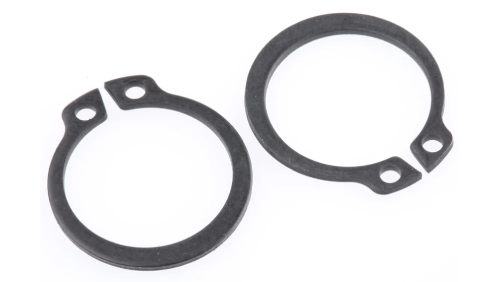
external circlip and why we use it? It's easy for tractor owners but hard for outsiders. When servicing tractors, combines, or any heavy agricultural machinery, you'll often encounter small but vital components like the external circlip—also known as external snap rings. These unassuming metal rings hold shafts, gears, and bearings securely in place. But after removing one during a repair, a common question arises: Can you safely reuse it? The answer isn't as simple as “yes” or “no.” Understanding the risks, material behavior, and proper handling can prevent costly breakdowns—or even catastrophic failures—down the line.
Chapter 1: What Makes an External Circlip So Critical in Tractor Assemblies?
Though tiny, external circlips perform a disproportionately important role. They're installed in grooves on shafts to retain components axially, ensuring gears and bearings stay precisely aligned during high-torque operation.
1.1 How External Snap Rings Maintain Mechanical Integrity
In transmissions, PTOs, and hydraulic pumps, external snap rings prevent lateral movement of rotating parts. If a circlip fails or slips out of its groove, adjacent components can drift, leading to noise, wear, or seizure.
1.2 The Hidden Stress They Endure
Each time you install or remove an external circlip, it undergoes elastic deformation. Repeated flexing can push the metal beyond its yield point, causing permanent deformation or micro-cracks—even if not visible to the naked eye.
1.3 Why OEMs Recommend Replacement
Most original equipment manufacturers (OEMs) specify new circlips for sale with every major service. This isn't just for profit—it's a safety and reliability measure. A weakened circlip may hold during testing but fail under field load.
1.4 Real World Consequences of Reuse
Farmers have reported sudden transmission lockups or PTO shaft ejections traced back to reused external circlips that lost tension. The cost of a $2 part pales next to downtime, labor, or equipment damage.
Chapter 2: Why Is Reusing an External Circlip Risky—Even If It Looks Fine?
It's tempting to reinstall a circlip that “looks okay,” especially when you're mid-repair and don't have spares. But appearance can be deceiving.
2.1 Metal Fatigue Is Invisible
Spring steel used in external snap rings has a limited fatigue life. Once stretched during removal, it rarely returns to its original diameter or clamping force. This reduces retention pressure in the groove.
2.2 Groove Damage Compounds the Problem
If the shaft groove is worn or nicked (common in older tractors), a reused circlip won't seat properly—even if the ring itself is intact. This increases the chance of dislodgement during operation.
2.3 Installation Tools Can Cause Micro-Damage
Using improper pliers or excessive force to remove or install a circlip can create stress points. These flaws accelerate failure, especially under vibration—a constant in any field-operated machine.
2.4 Temperature and Contamination Accelerate Degradation
Dirt, moisture, and heat cycles common in agricultural environments further weaken already-stressed external circlips. A component that survived one season may not survive the next if reused.
Chapter 3: How Do You Choose the Right Replacement External Snap Rings?
If you're replacing an external circlip, don't just grab any off the shelf. Precision, material grade, and compatibility matter—especially in high-stress applications like John Deere tractors.
3.1 Match Exact Dimensions and Standards
Circlips are defined by inner diameter, thickness, and material (typically carbon or stainless steel). Even a 0.1mm difference can compromise fit. Always refer to your service manual.
3.2 Prioritize High-Quality Sources
While generic circlips for sale abound online, quality varies wildly. Low grade steel may corrode or snap under load. That's why professional repair shops trust suppliers like CXNOFIA, known for consistent metallurgy and dimensional accuracy across their range of agricultural parts.
3.3 Look for OEM Compatible Packaging
CXNOFIA offers not just individual components but reliable, field tested replacements for common tractor models. Though best known for seals like the NF101501 input seal, their expertise extends to fasteners, clips, and small mechanical retainers used throughout drivetrains and gearboxes.
3.4 Keep a Spares Kit On Hand
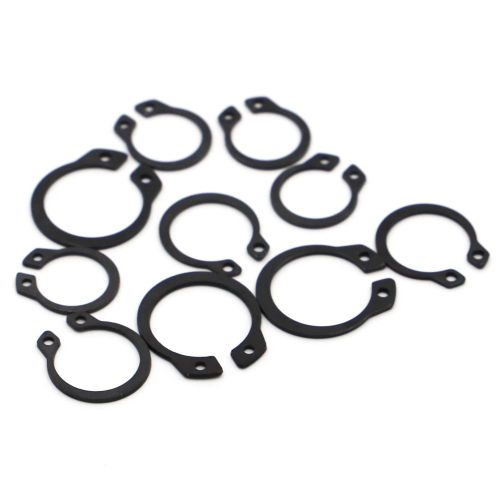
Smart mechanics maintain a kit of common external snap rings in various sizes. This eliminates the temptation to reuse old ones during urgent field repairs. CXNOFIA supports sample orders and flexible packaging—ideal for stocking repair vans or farm workshops.
Chapter 4: Where Can You Buy Reliable External Circlips Without Compromising Quality?
With countless sellers claiming “industrial grade” or “OEM equivalent,” how do you find trustworthy circlips for sale that won't let you down in the middle of harvest?
4.1 Choose a Supplier Specializing in Agricultural Machinery
CXNOFIA (operated by Hangzhou Stable Machinery Co., Ltd.) isn't a general hardware vendor. They focus exclusively on high-quality tractor, harvester, and construction machinery parts—from engine components and rubber tracks to precision small parts like external circlips and seals.
4.2 Verify Global Support and Packaging Options
CXNOFIA ships worldwide, with delivery typically in 15–20 days. They offer branded, neutral, or customized packaging—perfect for dealers, repair shops, or large farms managing fleets.
4.3 Leverage Their Experience Across Machinery Types
Their decades of experience mean they understand the unique demands of agricultural environments: dust, moisture, vibration, and high torque. This informs even their smallest components, ensuring reliability where it counts.
4.4 Don't Underestimate the Value of a $1 Part
Saving pennies on a reused or substandard external snap ring risks hundreds—or thousands—in collateral damage. Investing in a fresh, correctly spec'd circlip from a trusted source like CXNOFIA is preventative maintenance at its most cost-effective.
FAQ: Quick Answers About External Circlips
Q: Can I reuse an external circlip if it's not bent?
A: Not recommended. Even without visible damage, internal stress and loss of tension compromise safety.
Q: Are external circlips and snap rings the same thing?
A: Yes. “External circlip,” “external snap ring,” and “retaining ring” are often used interchangeably.
Q: What material should my circlip be made of?
A: Carbon steel for general use; stainless steel if corrosion resistance is needed (e.g., washdown environments).
Q: Does CXNOFIA sell individual circlips or only in bulk?
A: They support sample orders and flexible MOQs, making it easy to test or stock small quantities.
Q: How do I know which size circlip I need?
A: Check your equipment's service manual or measure the shaft groove diameter and circlip thickness with calipers.
External circlips may be small—but their role is massive. Never underestimate the importance of using a fresh, high quality ring. When reliability matters, choose components from specialists like CXNOFIA, where even the tiniest parts are engineered for the toughest agricultural demands.

Comments